Why Buyers Shouldn't Overlook a Fall MoveYou've been waiting for something to change before you buy. It just might not be the thing you expected…While everyone’s paying attention to

Dated: May 1 2025
Views: 137

Talk about the economy is all over the news, and the odds of a recession are rising this year. That’s leaving a lot of people wondering what it means for the value of their home – and their buying power.
Let’s take a look at some historical data to show what’s happened in the housing market during each recession, going all the way back to the 1980s. The facts may surprise you.
Many people think that if a recession hits, home prices will fall like they did in 2008. But that was an exception, not the rule. It was the only time the market saw such a steep drop in prices. And it hasn’t happened since, mainly because inventory is still so low overall. Even in markets where the number of homes for sale has started to rise this year, inventory is still far below the oversupply of homes that led up to the housing crash.
In fact, according to data from Cotality (formerly CoreLogic), in four of the last six recessions, home prices actually went up (see graph below)
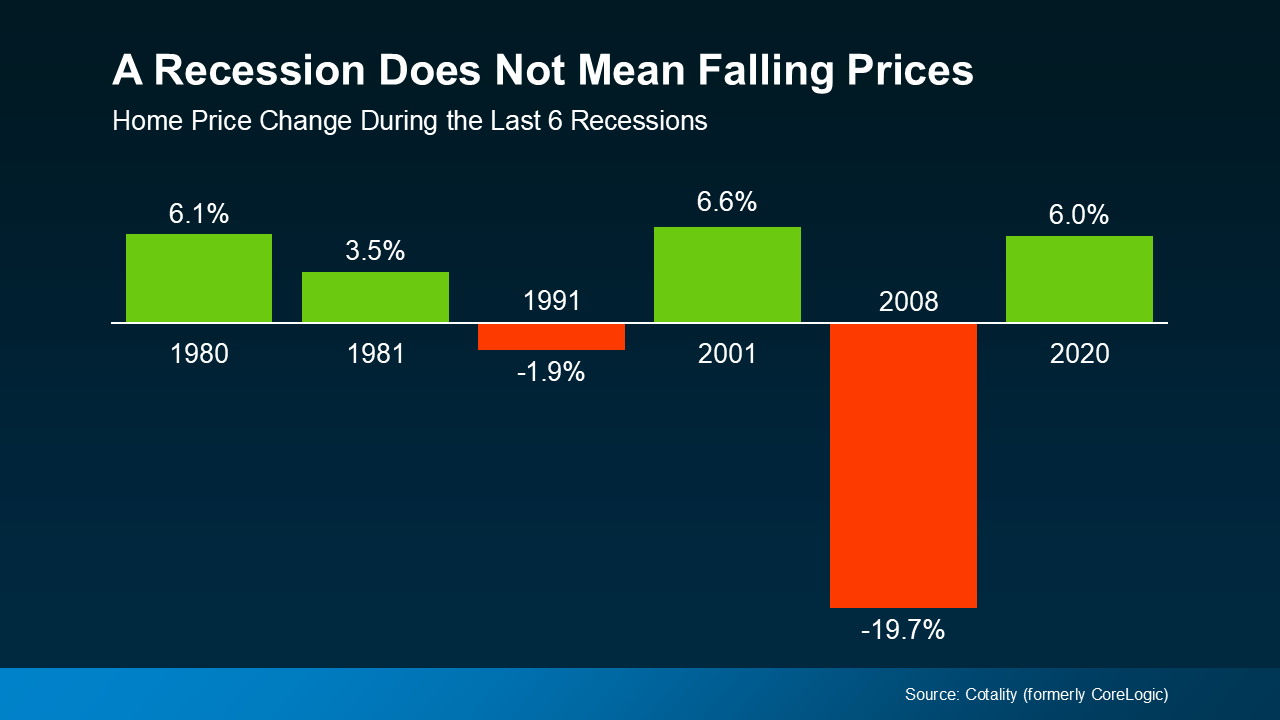 So, don’t assume a recession will lead to a significant drop in home values. The data simply doesn’t support that idea. Instead, home prices usually follow whatever trajectory they’re already on. And right now, nationally, home prices are still rising, just at a more normal pace.
While home prices tend to stay on their current path, mortgage rates usually drop during economic slowdowns. Again, looking at data from the last six recessions, mortgage rates fell each time (see graph below):
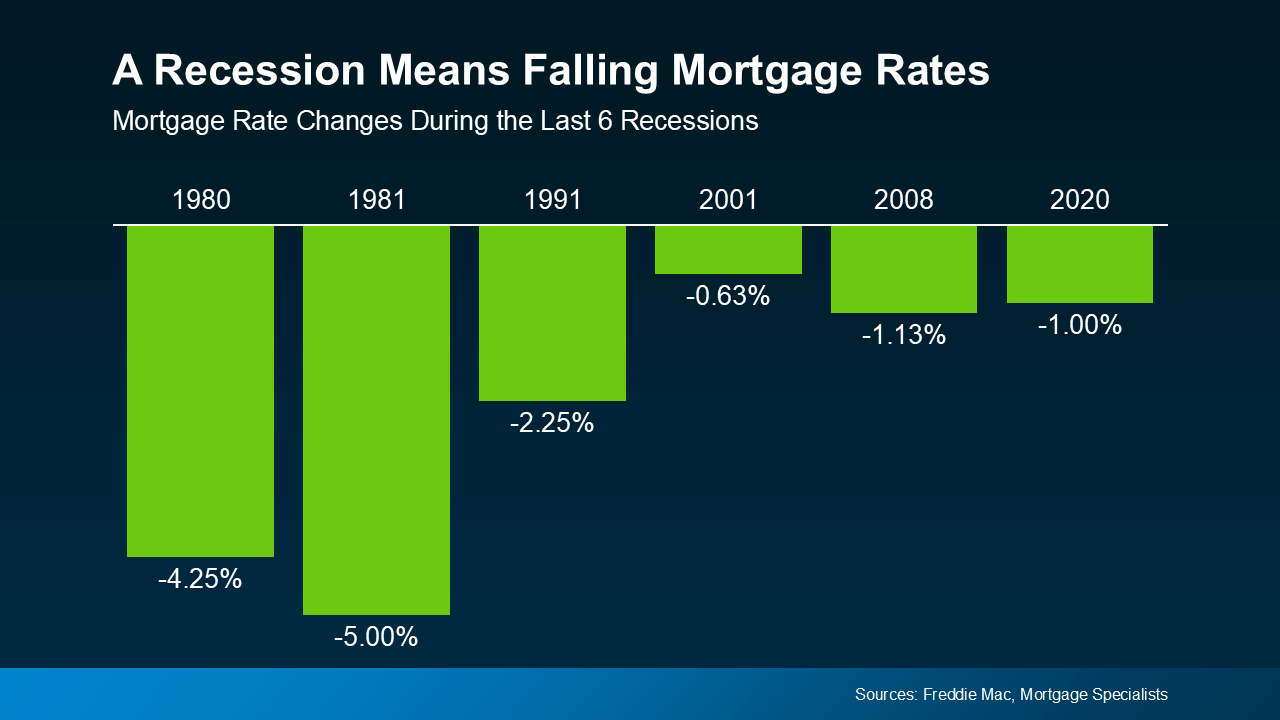 So, a recession means rates could decline. And while that would help with your buying power, don’t expect the return of a 3% rate.
The answer to the recession question is still unknown, but the odds have gone up. However, that doesn’t mean you have to worry about what it means for the housing market – or the value of your home. Historical data tells us what usually happens.
If you’re wondering how the current economy is impacting our local market, let’s connect.

My Background and WHAT IT MEANS FOR YOU I understand that buying or selling a home is more than just a tran....
Why Buyers Shouldn't Overlook a Fall MoveYou've been waiting for something to change before you buy. It just might not be the thing you expected…While everyone’s paying attention to
Data Centers Are Moving Closer to Homes. What Does That Mean for You?Data centers probably weren't on your list of things to think about when buying or selling a home.School districts? Sure. How
The Housing Market Split in 2. Which Side Is Your House On?Ask a couple people how the housing market is doing and you’ll probably get a couple different answers. That’s because right,
Remote Work Could Be Your Affordability AnswerFor most first-time buyers, the hardest part of buying a home is making the numbers work. You budget, you save, and the finish line still feels far.&
 All or a portion of the multiple listing information is provided by the Central Virginia Regional Multiple Listing Service, LLC, from a copyrighted compilation of listings. All CVR MLS information provided is deemed reliable but is not guaranteed accurate. The compilation of listings and each individual listing are ©2026 Central Virginia Regional Multiple Listing Service, LLC. All rights reserved.
All MLS listings are © 2026 Central Virginia Regional Multiple Listing Service, LLC. All
rights reserved. No one may copy and/or repost these MLS listings, or any portion thereof, without the written permission of an authorized officer of the Central Virginia Regional Multiple Listing Service, LLC.
All listings with the CVRMLS logo are provided courtesy of the IDX program.
Last Updated: September 14, 2026 1:24 AM UTC
Show More...
All or a portion of the multiple listing information is provided by the Central Virginia Regional Multiple Listing Service, LLC, from a copyrighted compilation of listings. All CVR MLS information provided is deemed reliable but is not guaranteed accurate. The compilation of listings and each individual listing are ©2026 Central Virginia Regional Multiple Listing Service, LLC. All rights reserved.
All MLS listings are © 2026 Central Virginia Regional Multiple Listing Service, LLC. All
rights reserved. No one may copy and/or repost these MLS listings, or any portion thereof, without the written permission of an authorized officer of the Central Virginia Regional Multiple Listing Service, LLC.
All listings with the CVRMLS logo are provided courtesy of the IDX program.
Last Updated: September 14, 2026 1:24 AM UTC
Show More...
